Lawrence had been dealing with diabetes for years. But in 2022, things took a turn when his kidneys failed, and he had to start dialysis.
About Lawrence Henry
Lawrence Henry has lived a life of service—first to his country, then his city, and then his family. Now, he needs someone to help him.
Lawrence came from St. Lucia to the U.S. when he was in his late teens, settling in Brooklyn, where he still lives. He joined the Army, stationed mainly at Camp Drum in upstate New York. His military service included a deployment to the Caribbean, where he protected U.S. interests and personnel during a period of political upheaval.
When he finished his military service, he joined the New York City Department of Corrections, where he served for 19 years at the city’s notorious Rikers Island prison complex.
Lawrence had been living with diabetes for years. While vacationing in St. Lucia, it flared up and led to a kidney failure diagnosis. He began dialysis treatments in 2022, which forced him to retire from his job.
The treatments that keep him alive have also made traveling impossible, replacing the freedom he once enjoyed with a schedule that controls his days.
A kidney transplant could restore Lawrence’s once-active life, giving him the chance to cheer on his kids at sporting events, return to St. Lucia, travel the world, and rediscover the life dialysis has put on hold.
Do you want to help Lawrence? Please share the link to Lawrence’s story or reach out to Kidneys for Communities at info@kidneysforcommunities.org to learn more about how you can help. The Kidneys for Commun ities team is here to answer your questions.
KIDNEY DONATION
How does kidney donation work?
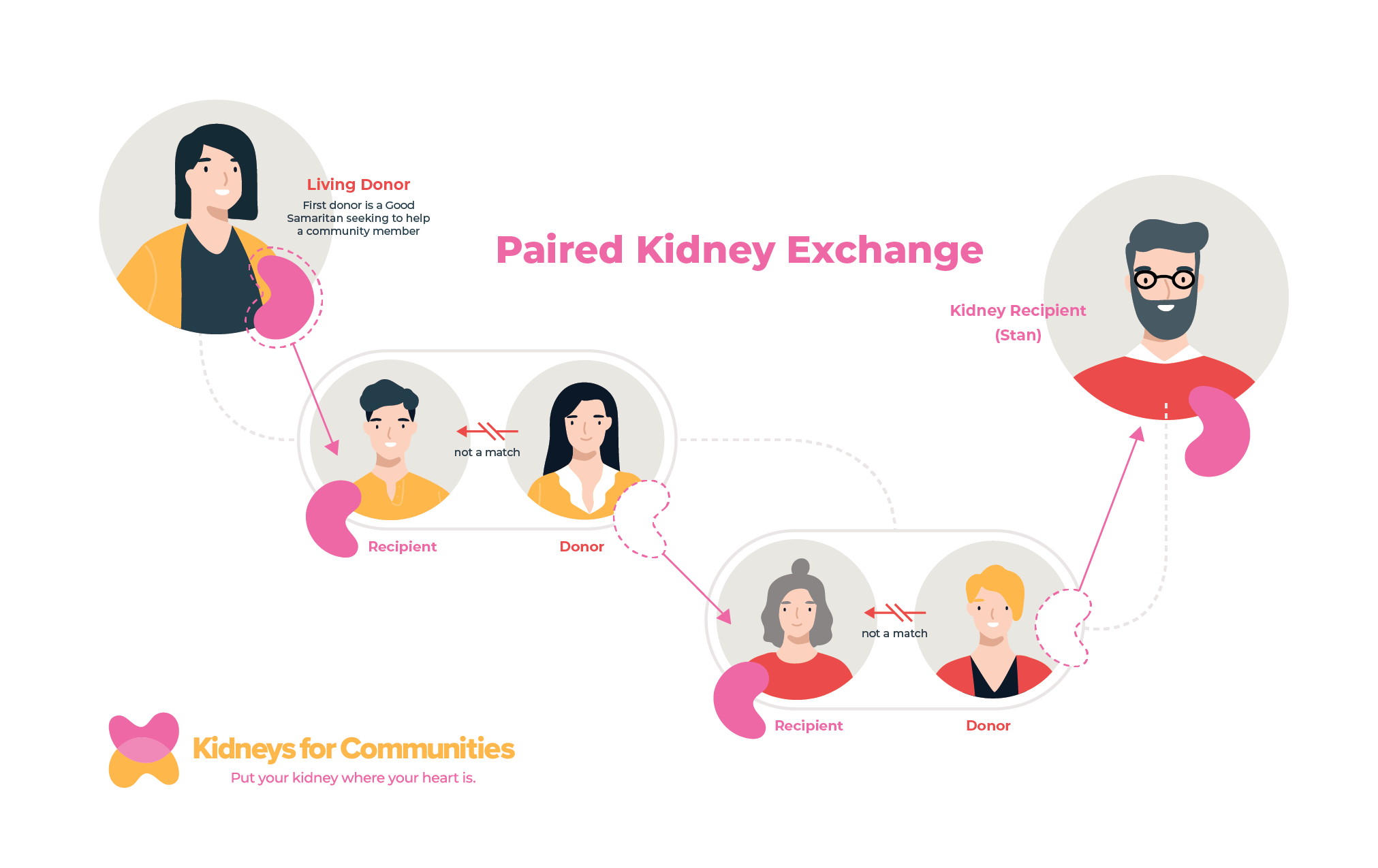
A donor doesn’t need to be an exact match. In fact, because of the Nobel Prize-winning paired kidney exchange program, your kidney donation will not only save one life, but it will save several more in the chain.
Living kidney donation is safe, and all costs associated with your donation are covered. Living donor kidneys also last much longer than deceased donor kidneys. A deceased donor kidney transplant, on average, lasts 10-15 years, while a living donor transplant lasts 12-20 years.
Kidneys for Communities® Donor Benefits
Donating a kidney is one of the most rewarding and fulfilling acts someone can do.
Kidneys for Communities can help you through the process to help save a life, but we know there are many obstacles that can be prohibitive to the donor. At Kidneys for Communities, we take care of our donors with the industry’s most complete donor benefits package:
Onboarding and education
Personalized guidance through the donation process
Anonymity
Cost reimbursements:
Travel, food & lodging, lost wages, child, pet and adult care