On December 22, 2025, just days before Christmas, 20-year-old Reno EMT Lucas Gorelick walked into an operating room at NYU Langone in New York City with a singular purpose: to donate his kidney to a man he had never met.
That man was Christopher Romero, a 40-year-old recently retired Highway Patrol officer with the New York City Police Department. After years of service protecting New Yorkers, Christopher was facing a battle of his own: kidney failure.
Lucas didn’t know Christopher personally. What he did know though, was that first responders show up for others every single day. And when he read Christopher’s story through Kidneys for Communities, the decision became clear. The organization supported him throughout the entire process.
Lucas has spent the past three years working in EMS with multiple agencies across the country, most recently in Reno, Nevada. He has witnessed the long shifts, the emotional toll, and the quiet heroism that define life in emergency services. What started as a medical interest in living kidney donation quickly became something more.
“Having worked in EMS, I’ve seen firsthand the dedication and sacrifice first responders make every day,” Lucas shared. “When I read about Sergeant Christopher Romero through Kidneys for Communities and the challenges he was facing, I knew this was an opportunity to step forward.”
After months of testing, evaluations, and preparation, the transplant became a reality at NYU Langone Health on December 22. One life changed. Two families forever connected.
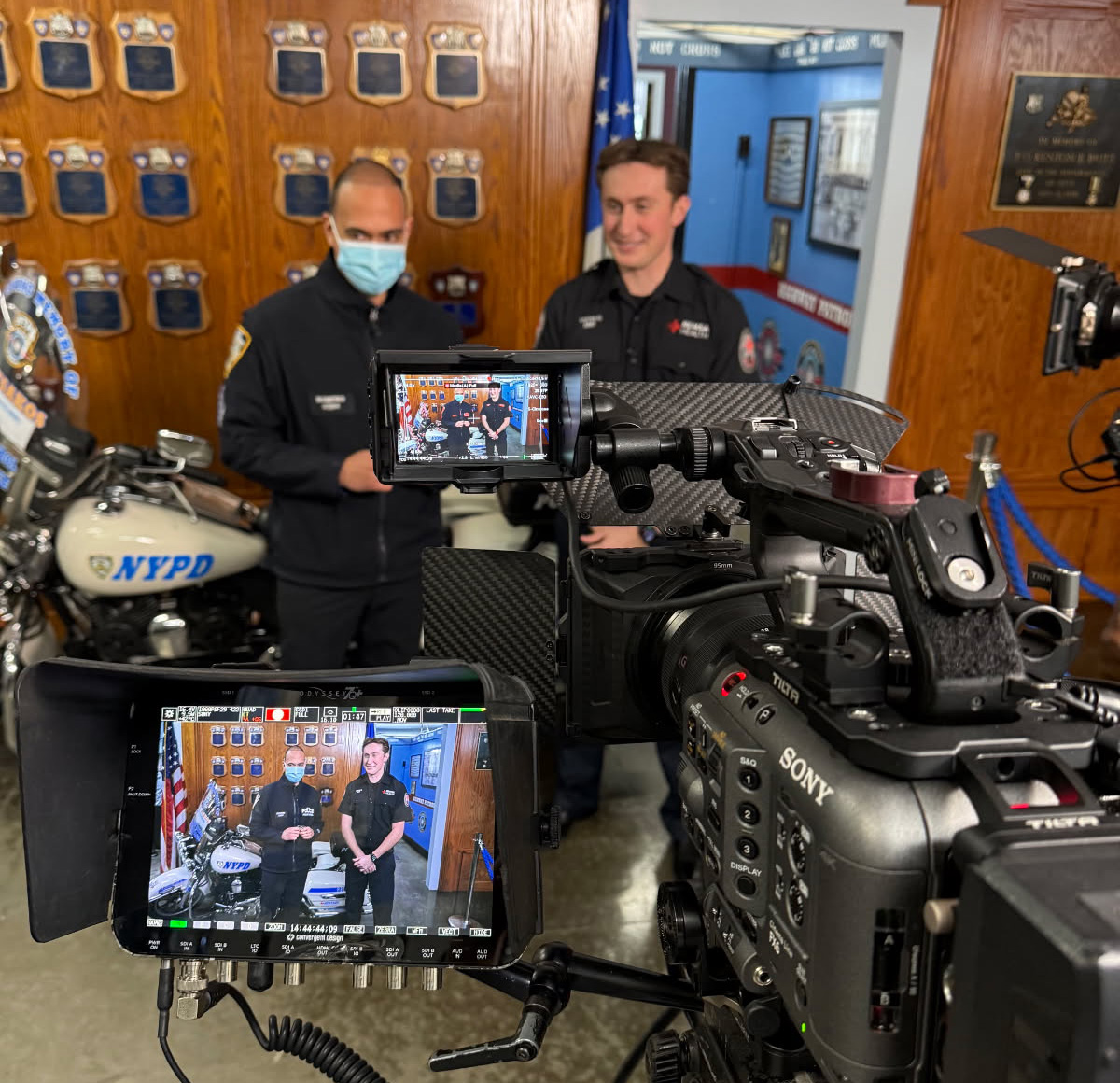
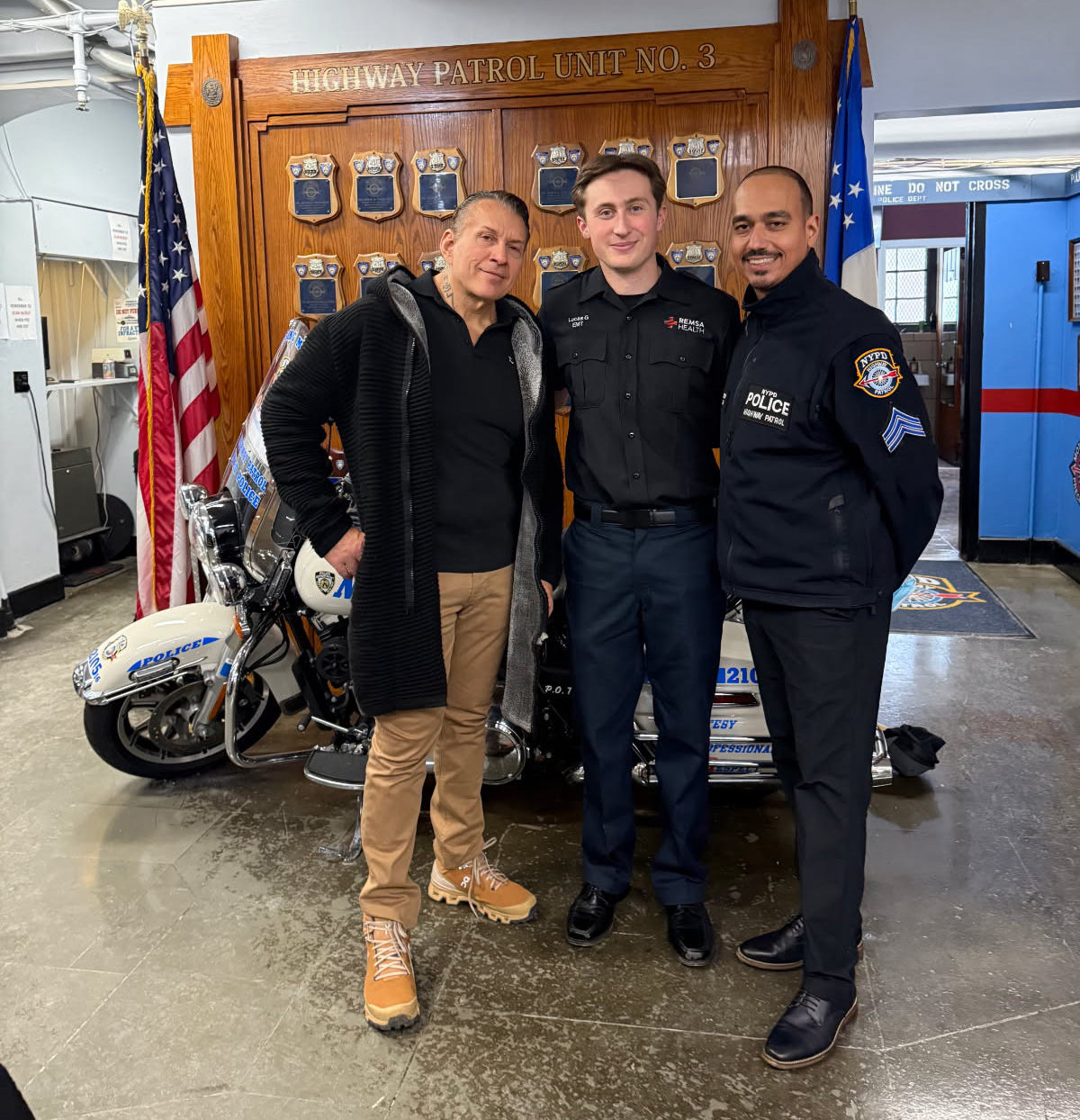
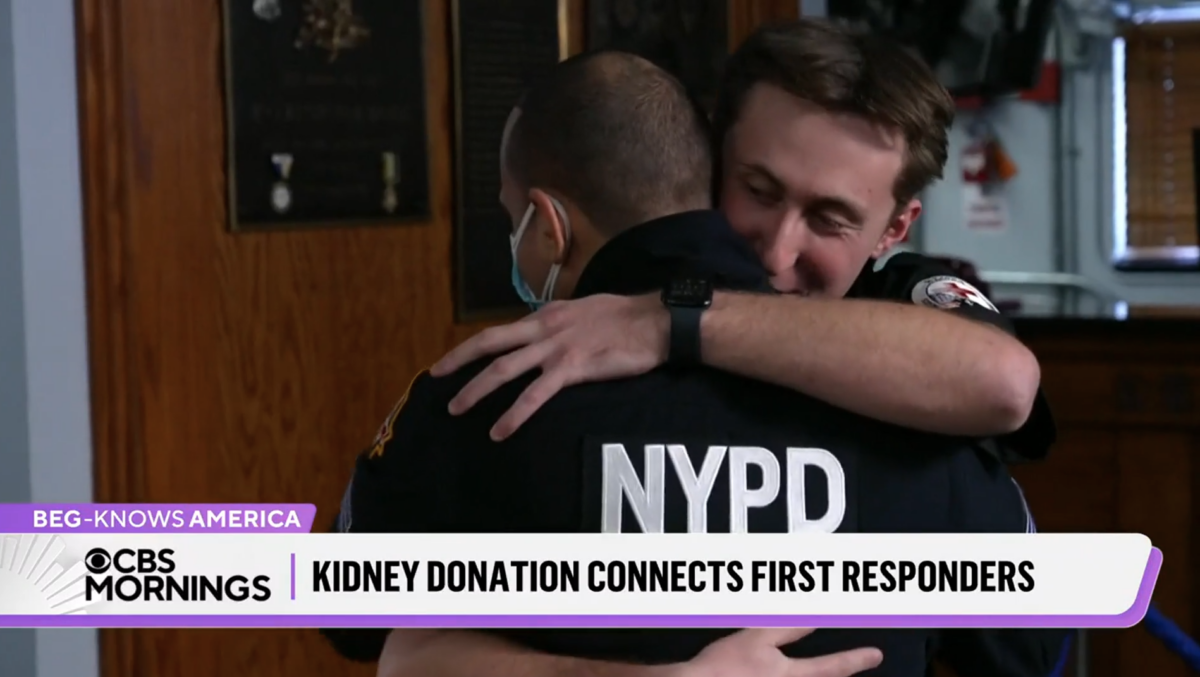
Then on February 24, 2026, Lucas and Christopher met publicly for the first time in front of cameras at an NYPD substation in Queens in the middle of a snowstorm. The moment was captured by CBS Mornings — a reunion between a young EMT from Nevada and a veteran New York Highway Patrol officer whose life he helped save.
More than 100,000 people in the United States are currently waiting for a kidney transplant. Every day, patients spend hours on dialysis, hoping their phone will ring with news that a donor has been found. Lucas and Christopher want people to understand that living donation is possible — and powerful. “You have the power to save a life,” Lucas said. “Whether for a neighbor, a friend, a family member, or even a stranger.”
Reno and Queens are separated by nearly 2,500 miles, a distance bridged by Kidneys for Communities who connected the two, provided travel and lodging reimbursement, and guiding them throughout the process. A 20-year-old EMT and a 40-year-old retired Highway Patrol officer connected not by geography, but by commitment to something bigger than themselves. Christopher dedicated his career to protecting the public. Lucas chose to protect one of his own.
If you’ve ever considered becoming a living kidney donor, this is your reminder: ordinary people do extraordinary things every day. And sometimes, those extraordinary things give someone else a second chance at life.