Fatimah, a Brooklyn native, mom, and former dispatcher for the FDNY, has stage 5 renal failure and is on dialysis three times a week. She wants to get back to being the best role model for her son, and back to serving the community she loves.
About Fatimah Shepherd
Fatimah Shepherd has followed in her mother’s footsteps, serving people in need.
The Brooklyn native accompanied her mom to work for “bring your daughter to work” day, and she got to see her as a police communications tech responding to calls from people in crisis. Fatimah knew from that moment onward what she wanted to do.
Starting as a dispatcher for the New York Police Department, after eight years Fatimah moved over to Dispatch at FDNY.
“We are the eyes for the firefighters, acting as the line of communication between the victims and the engines and trucks,” she says. “I’m often the voice of calm in what could be the most traumatic moments of a caller’s life. It’s an awesome responsibility, with its challenges and its rewards when you know you’ve helped save a life.”
Nearly three years ago, Fatimah became pregnant with her son, Oakari. Diagnosed with lupus, doctors warned her that the pregnancy could cause serious health problems. But Fatimah was determined to be a mom, so she took the risk. But 14 weeks into her pregnancy, her kidneys became compromised and she needed dialysis six times a week.
Almost two years ago, Oakari was born. “He’s my miracle baby,” the new mom says.
But Fatimah in Stage 5 renal failure and is on dialysis three times a week. She loves being a mom and wants to be a good role model for him. She also talks about returning to work at the FDNY, serving the community she loves.
A new kidney will enable her to enable her to do both.
Do you want to help Fatimah? Please share the link to Fatimah’s story or reach out to Kidneys for Communities at info@kidneysforcommunities.org to learn more about how you can help. The Kidneys for Communities team is here to answer your questions.
KIDNEY DONATION
How does kidney donation work?
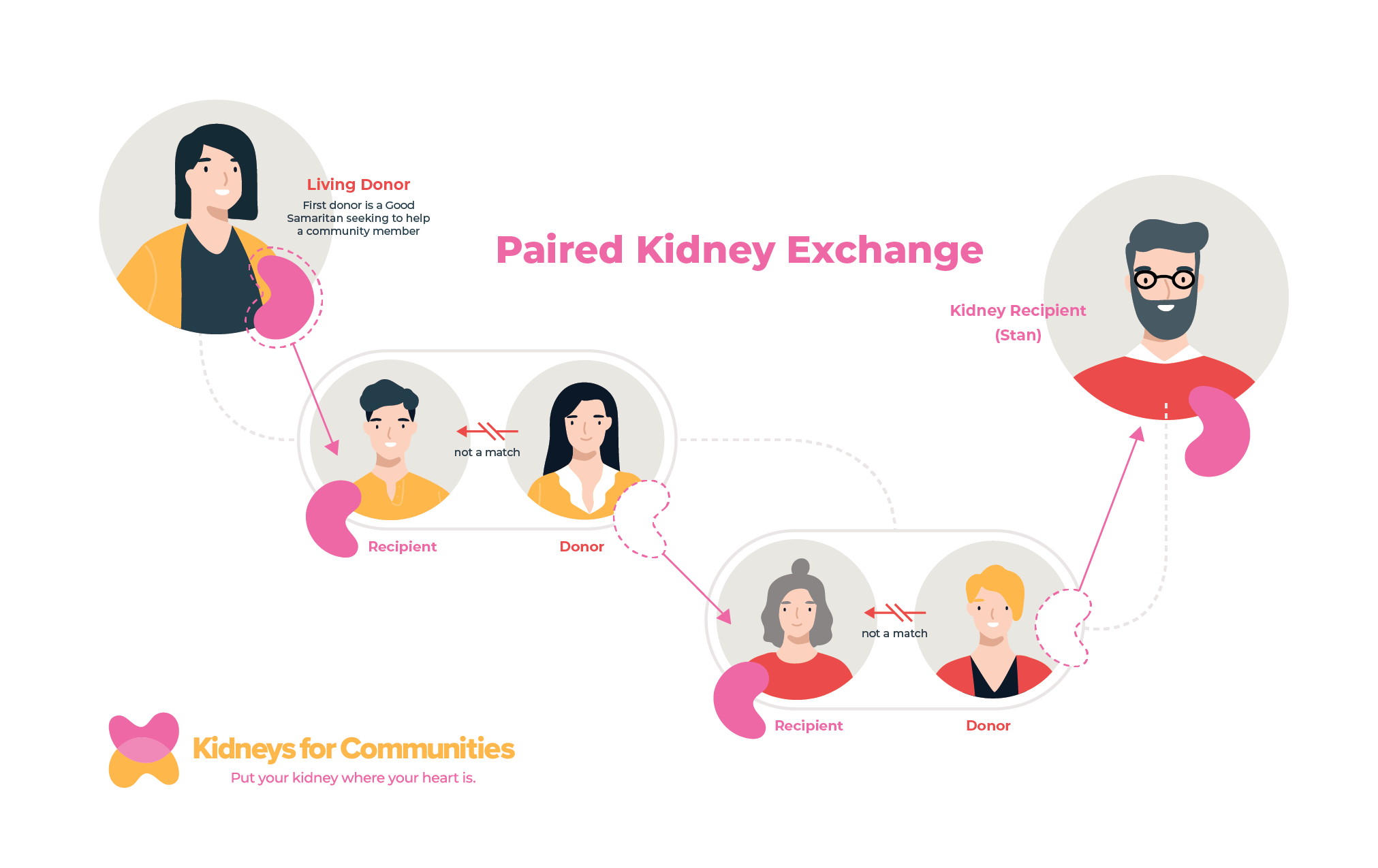
A donor doesn’t need to be an exact match. In fact, because of the Nobel Prize-winning paired kidney exchange program, your kidney donation will not only save one life, but it will save several more in the chain.
Living kidney donation is safe, and all costs associated with your donation are covered. Living donor kidneys also last much longer than deceased donor kidneys. A deceased donor kidney transplant, on average, lasts 10-15 years, while a living donor transplant lasts 12-20 years.
Kidneys for Communities® Donor Benefits
Donating a kidney is one of the most rewarding and fulfilling acts someone can do.
Kidneys for Communities can help you through the process to help save a life, but we know there are many obstacles that can be prohibitive to the donor. At Kidneys for Communities, we take care of our donors with the industry’s most complete donor benefits package:
Onboarding and education
Personalized guidance through the donation process
Anonymity
Cost reimbursements:
Travel, food & lodging, lost wages, child, pet and adult care